Meningitis is a serious and potentially life-threatening condition affecting the membranes surrounding the brain and spinal cord. It can affect anyone, but is most common among infants, children, and young adults. If not treated quickly, it can lead to severe complications, including sepsis, long-term neurological damage, or death1.
Globally, meningitis remains a major public health concern. The World Health Organization (WHO) highlights that bacterial meningitis is particularly severe, with a high risk of death and long-term complications2.
Even in high-income settings, meningitis continues to pose risks. Recent alerts in the United Kingdom have shown that localized outbreaks can still occur, reinforcing the importance of early detection, timely treatment, and strong surveillance systems3.
These challenges are more pronounced in regions where surveillance systems and laboratory capacity are still developing. Limited data can delay detection, weaken response efforts, and constrain evidence-based decision-making4.
MenMap at the GMI Regional Meeting
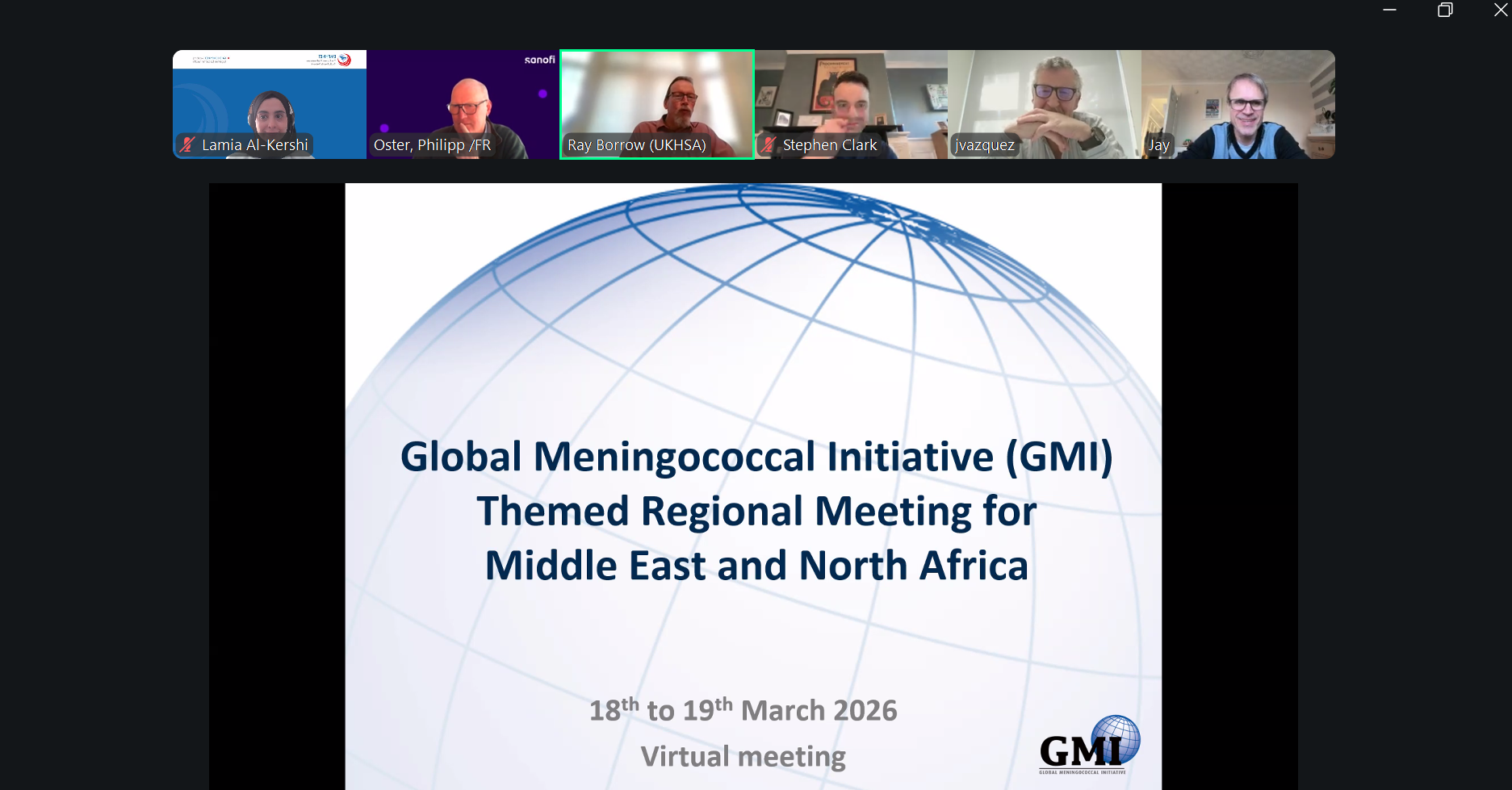
In March 2026, the Meningitis and Septicemia Mapping (MenMap) Network was presented at the Global Meningococcal Initiative (GMI) Themed Regional Meeting for the Middle East and North Africa, highlighting the need for reliable and coordinated surveillance of invasive bacterial diseases.
The meeting brought together experts and public health stakeholders to discuss meningitis epidemiology, vaccination strategies, and surveillance systems. Within this context, MenMap was presented as a model for strengthening surveillance and generating actionable evidence across Jordan, Egypt, and Iraq.
A Regional Need for Better Data
Invasive bacterial diseases, including meningitis and septicemia, remain a significant public health challenge across the region. These diseases are often under-detected or inconsistently reported due to gaps in surveillance systems and laboratory capacity.
MenMap was established to address this need. It introduces standardized, case-based surveillance and real-time PCR diagnostics to support a clearer understanding of disease patterns and burden.
The network operates across Jordan, Egypt, and Iraq, linking sentinel hospitals, laboratories, and public health stakeholders within a coordinated regional platform.
What MenMap Has Achieved
Since its launch, the network has documented:
· 3,985 suspected cases
· 314 confirmed cases
Key findings include:
· Streptococcus pneumoniae as the predominant pathogen
· Higher burden among young children, particularly those under one year of age
· All confirmed cases requiring hospitalization
At the country level:
· Jordan maintained continuous surveillance with improved detection
· Egypt strengthened laboratory confirmation and site performance
· Iraq maintained surveillance despite operational challenges
These results reflect strengthened surveillance systems and improved capacity to detect and respond to disease.
Beyond Data: Building Systems and Capacity
MenMap’s value extends beyond case counts.
The network has:
· Standardized surveillance methodologies across countries
· Strengthened laboratory capacity through PCR diagnostics and training
· Improved data quality and comparability
· Established a collaborative platform for regional coordination and knowledge sharing
Notably, external quality assessment (EQA) results conducted by Institute Pasteur showed clear improvement between Year 1 and Year 2 across all three participating countries, reflecting strengthened laboratory performance and increased accuracy in pathogen identification.
These system-level gains are essential. Strong surveillance underpins effective prevention, timely response, and evidence-based policy.
Why MenMap Matters Now
Discussions at the GMI meeting reinforced that meningitis remains a priority in the region, particularly in the context of:
· Mass gatherings and travel-related transmission
· Emerging antimicrobial resistance
· Gaps in vaccination coverage and implementation
In this context, MenMap provides reliable, locally generated evidence that supports:
· Targeted vaccination strategies
· Early detection of outbreaks
· More effective allocation of resources
· Monitoring of intervention impact
While MenMap has made significant progress, its work is far from complete.
The second year of implementation has demonstrated increasing technical maturity, stronger coordination, and the ability to adapt to operational challenges while maintaining surveillance continuity.
Sustaining and expanding MenMap will be essential to:
· Build a stronger regional evidence base
· Enhance preparedness and response capacity
· Support long-term meningitis prevention and control efforts
Looking Ahead
MenMap provides a practical model for regional collaboration in public health surveillance. Its presentation at the GMI Regional Meeting reflects growing recognition of its role.
Continued investment will ensure that surveillance data informs action and supports effective prevention and response efforts.